
Key decision taken over major plans affecting Sunderland visitor sites and country parks
Major plans to roll out electric vehicle (EV) charging infrastructure across visitor sites and country parks on Wearside have taken a key step forward, following a decision by city leaders.
Sunderland City Council’s cabinet of senior Labour councillors, at a meeting this week, agreed to start the process to procure and appoint a “single charge-point operator” to supply, manage and operate new EV charge-points.
A cabinet report confirmed 12 locations have been identified to support the city council’s wider ambitions to create one of the best public charging networks in the country.

The £1 million (£1,009,127) programme installing the charging points comes at no cost to the council as it is part of a wider £4 million grant received as part of a programme from North East Mayor Kim McGuinness to roll-out EV charging in cities, towns and villages across the North East.
A report to Sunderland City Council’s cabinet on Thursday (January 15, 2026) said that the council’s contribution of £823,968 would be “fully funded” from the City Region Sustainable Transport Settlement grant from the North East Combined Authority (NECA).
Additional “match funding” of £185,159 is also expected to be “met by the procured charge-point operator for their directly incurred costs,” council documents confirm.
The first phase of installations are expected to take place at Elemore Park, Herrington Country Park, Hetton Lyons Country Park and Washington F‑Pit.
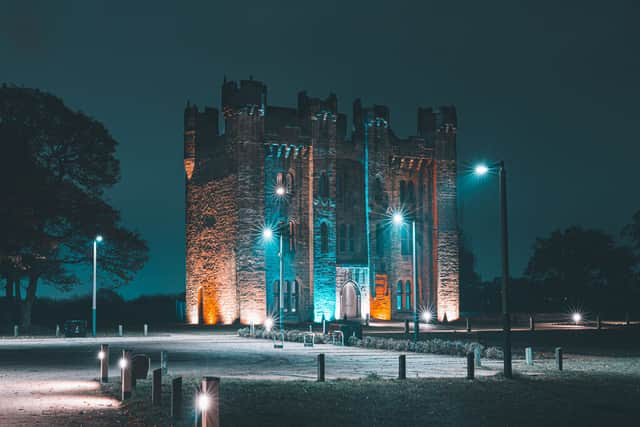
A second phase, subject to further assessment and consultation, includes Barnes Park, Bonemill Lane, Bowes Railway Museum, Hylton Castle grounds car park, Raich Carter Sports Centre, Rectory Park, Thompson Park and Washington Wildfowl Trust.
There are currently more than 515 publicly accessible charge-points across the city and each of the new locations is anticipated to have up to four new charge-points.
Councillor Lindsey Leonard, the city council’s cabinet member for environment, transport and net zero, said the proposed locations on council-managed land and associated car parks would “further improve EV charging options across the city and add another £1 million worth of infrastructure with no funding required from the council”.
“The additional 12 locations at public parks and public buildings will be complementing existing EV charging at city centre car parks and the hubs that are now being delivered across all wards in the city,” Cllr Leonard added.
“The key aim of this project is to plug gaps between those priorities previously identified by the council and other commercial sites.
“Drivers will be able to enjoy their visit to the park, museum or sports centre, and be able to charge their vehicle.
“With the third generation Nissan Leaf now rolling off production lines and further developments on gigafactories and EV battery manufacturing, new charge points at these popular locations show how as a city we continue to be at the heart of the development and on-going switch toward a more low-carbon economy.”
Sunderland City Council states the programme is aligned with the council’s EV Roadmap, City Plan and Low Carbon Action Plan and that these plans, together with the new funding, aim to increase access to charging, encouraging the transition to cleaner vehicles, and reducing carbon emissions.
The council added that introducing the new charge‑points at well‑used public spaces would provide convenient, modern facilities for both residents and visitors, and improve accessibility for drivers who may not have access to home charging.
Following cabinet approval this week, the council will progress the procurement and appointment of a single charge‑point operator to draw-up the installation timetable.
The charge-point usage will require a payment per kwh based on charging speed and it is expected these will be determined once an operator is appointed.
The contractor appointment will also establish future operational and revenue‑sharing arrangements.
Cllr Leonard added: “Expanding high‑quality EV charging across our parks and visitor destinations is an important step in supporting cleaner travel and meeting our long‑term climate commitments.
“This investment ensures our city continues to lead the way in sustainable transport infrastructure.”
The report to cabinet can be read here: Cabinet EV infrastructure report