
Decision made on nature-boosting plans to revive saltmarsh habitats on Sunderland’s River Wear
Plans for a project aiming to “protect and enhance” saltmarsh habitats along the river Wear have been given the green light.
Sunderland City Council’s planning department has approved an application for two stretches of the riverside, including a site near the Claxheugh Rocks, South Hylton and Baron’s Quay in North Hylton.
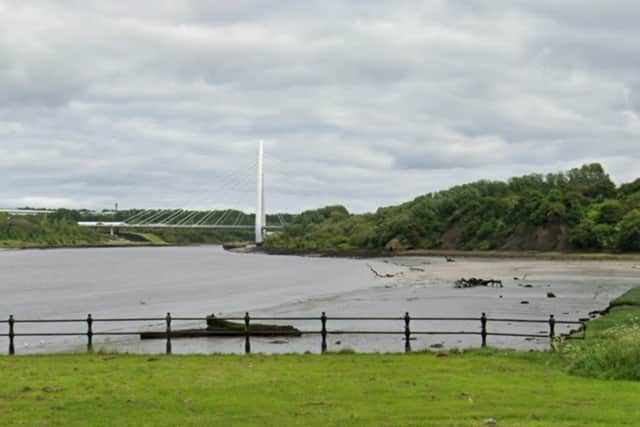

The plans are part of a wider ecological project ‘Restoring Meadow, Marsh and Reef’ (ReMeMaRe) that aims to “reverse centuries of decline of our priority estuarine and coastal habitats.”
In Sunderland, the project aims to protect and enhance intertidal habitats, and to allow for the potential expansion of existing saltmarsh.
Planning documents submitted with the application said Groundwork North East and Cumbria had “delivered several intertidal habitat restoration and creation interventions” in recent years across the region, from the “retro fitting of artificial rock pools”, to “saltmarsh protection and enhancement” schemes.
Plans for Sunderland aimed to “encourage the natural estuarine process of deposition of sediment on the foreshore and give some protection from wave action” with hopes that the plans would “potentially allow the existing saltmarsh community to expand through natural colonisation”.
Original proposed works across the two sites also aimed to provide “ecological enhancement through protection and restoration of intertidal habitat” along more than 700m of the foreshore.
After considering the planning application and assessing it against planning policies, Sunderland City Council’s planning department approved it on August 13, 2025.
Council planners, in a decision report, said the plans would “not be visually intrusive” given the location of the development and taking into account that “chestnut stakes and brushwood fascines will only extend above the average high tide level by approximately 300mm”.
The council report also said that Sunderland City Council’s ecologist had “assessed the information submitted as part of this application and confirmed that in order for the application to be supported, a reduced scheme and further works to the BNG (biodiversity net gain) assessment would be required”.
The council ecologist said that “reducing the extent of the proposals” on Claxheugh Riverside LWS (local wildlife site) would “avoid the loss of a significant extent of mudflat where this forms a designated feature of the LWS, and associated effects on wading birds”.
The council decision report said the ecologist, subject to the changes, was “satisfied that the proposals avoid significant adverse impacts on the value and integrity of a wildlife corridor.”
The council report also concluded there would be no impact on the Green Belt or issues in relation to highway or pedestrian safety.
A previous supporting statement from the applicant said “Baron’s Quay and Timber Beach are among the most significant historic areas of saltmarsh that survive on the river Wear”.
By “encouraging restoration of natural estuarine processes of sediment accretion”, it was argued that the scheme would “protect and potentially enhance this saltmarsh habitat”.
Applicants added saltmarsh habitats in the UK and Ireland have already seen “loss and damage over centuries”, including the loss of ecosystems and functions provided by the habitats.
It was noted that “active intervention is required to reverse the decline of saltmarsh habitats, and to successfully restore resilient and well-functioning saltmarsh”.
The benefits of the Sunderland scheme included the potential to “reduce flooding and coastal erosion [and] increase carbon sequestration, as well as a range of other ecosystem services.”
For more information on the plan and council decision, visit Sunderland City Council’s planning portal website and search reference: 24/01942/FU4
Under planning conditions, the development must be brought forward within three years.