
We're restoring banks of the River Wear in Sunderland after centuries of industrial damage
Work is underway to repair banks of the River Wear ravaged by industry over the centuries to boost wildlife habitats and improve water quality.
The banks of the Wear are home to vital saltmarshes, which house salt-tolerant plants that won’t live anywhere else, invertebrates such as crabs and shrimp and juvenile fish who use it as nursery site away from the main channel.
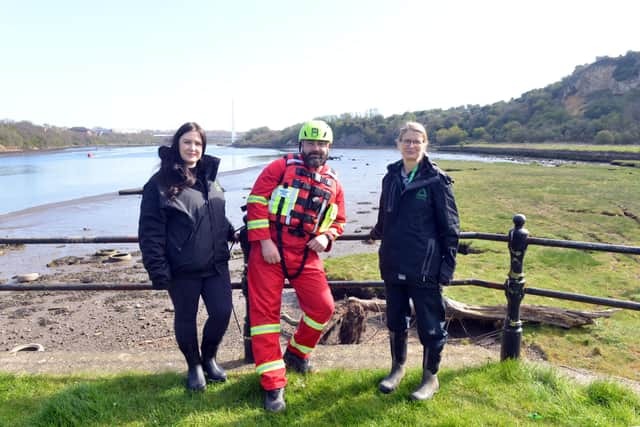

Once the biggest shipbuilding town in the world, much has been to the banks of the river in Sunderland over the years, for both industrial and developments purposes, damaging these biodiversity-rich areas.
However, pockets of saltmarshes remain - and they’re being restored to tackle the habitats lost, increase the numbers of fish, crabs and other marine life and improve water quality.
Environment charity Groundwork NE & Cumbria has secured more than £250,000 of funding to restore saltmarshes at Claxheugh Rock, near South Hylton, and Baron’s Quay on the north side of the river, totalling 0.7 hectares of estuary edge, (roughly the size of the pitch at the Stadium of Light.)
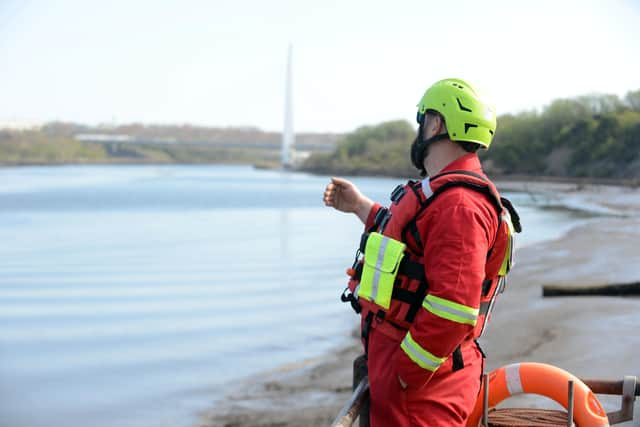
Supported by the Environment Agency and the Caterpillar Foundation, work is now underway on the major environmental project, with specialist contractors Swiftwater Solutions carrying out the works.
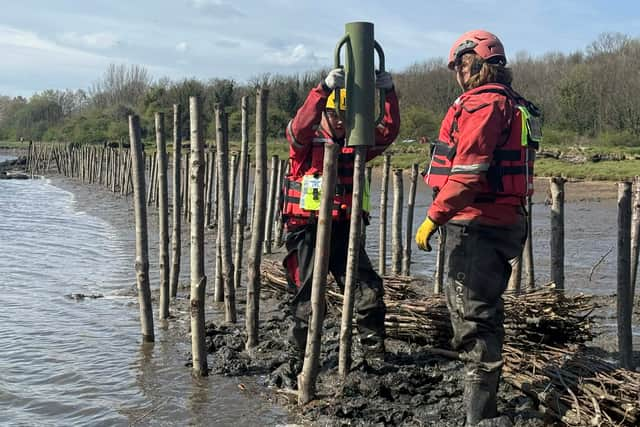
Armed with some very heavy duty mud boots, the Swiftwater team are painstakingly installing natural barriers from wooden stakes and woven brushwood, which protects the saltmarshes from the wave action.
With so many artificial, enclosed banks added to the Wear over the years, it prevents the river from acting as it naturally would in an estuary, but these restoration measures go some way to replicating the natural ebb and flow.
Hellen Hornby, Nature-based Solutions lead at Groundwork NE & Cumbria said: “There’s no way we can get it back to what it was 200 years ago, we still need port use and the developments that line the river.
“It’s never going to change in terms of putting it completely back, but the water quality is improving all the time. So all we can do now is provide that extra bit of habitat, so we can boost populations.”
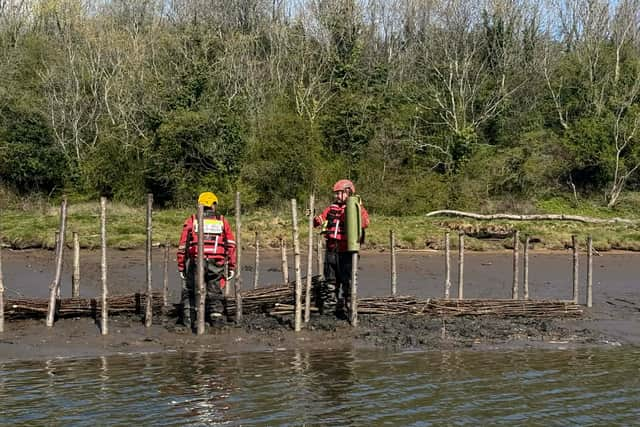
Speaking about the restoration works, which have started at Baron’s Quay first, Hellen added: “We are pinning the natural chestnut stakes into the ground and that provides a little bit of protection for the mud flats, that allows the mud and the silt and the sediment to build up so it doesn’t get washed away by the storms and the boat traffic coming down the river.
“It builds up slowly over time and that gets colonised by the saltmarsh plants that start growing on it, so that provides new habitat, home for crabs and fish and sea slaters, which are then food for otters, or bigger fish like cod and salmon which are now coming up and down the River Wear again.”
What is a saltmarsh?
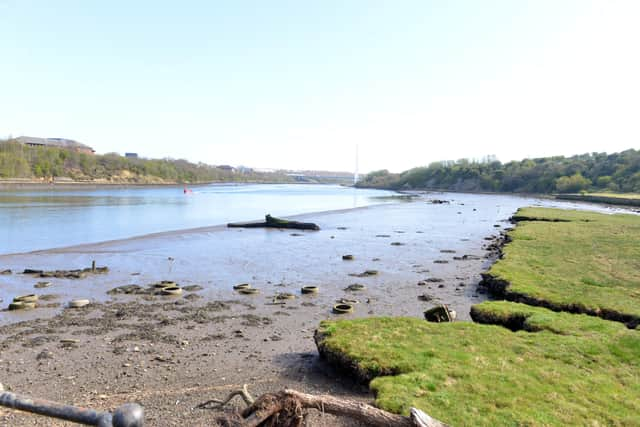
Saltmarshes are important ecosystems that are highly efficient at storing carbon naturally, delivering a host of biodiversity benefits and play a key role in addressing environmental change.
Historically, the River Wear would have been lined with miles of mudflat and saltmarsh, but centuries of industrialisation and human interference have stripped it away, altering the flow and speed of the river and decimating marine life.
Restoring the mudflat and saltmarsh will bring back native plant species that provide nurseries and safe havens for juvenile fish and crabs, which are a great food source for larger fish, birds and mammals including Sunderland’s bottlenose dolphins!
The team are not planting saltmarsh species, instead they are building natural barriers from wooden stakes and woven brushwood.
Positioning this installation at the right height in the mudflats will slow the river flow, remove sediment from the water allowing mud, sand and silt to build up burying the new structures. This will encourage natural re-seeding and colonisation of the site by native species already found on the river.
Eventually the new saltmarsh will become part of the riverbank providing homes for fish, crabs and other marine life.
How you can help
Groundwork NE & Cumbria is calling for local community support to back the project as, in the past, several trial projects on saltmarsh restoration in other parts of the North East have been hampered by anti-social behaviour.
Hellen said: “We are extremely grateful for the support towards from our funders the Environment Agency and the Caterpillar Foundation in supporting our programme ‘Revitalising our Estuaries’ and specifically with this project. This is our largest saltmarsh restoration project in the region.
“Previous smaller trials elsewhere in the North East have been hampered by anti-social behaviour. To avoid this happening in Sunderland, we want to liaise with any interested parties, community groups and users of the river and estuaries to explain what we are doing and what we hope to achieve.
“By explaining the benefits for all river users and how the work will improve the river by bolstering fish and crustacean stocks, we hope will encourage people to protect our work on the mud flats.”
You can find our more about the work of Ground Work North East & Cumbria at https://www.groundwork.org.uk/north-east-and-cumbria/