
Sharon Hodgson MP: Labour announce historical electoral reform to strengthen UK democracy
Since the Representation of the People’s Act (1969), voting has been something to consider only when you turn 18. However, in 2014 for Scotland and 2020 for Wales, this changed, when 16 and 17-year-olds became able to vote in devolved bodies or local elections.
However, in 2014 for Scotland and 2020 for Wales, this changed, when 16 and 17-year-olds became able to vote in devolved bodies or local elections.
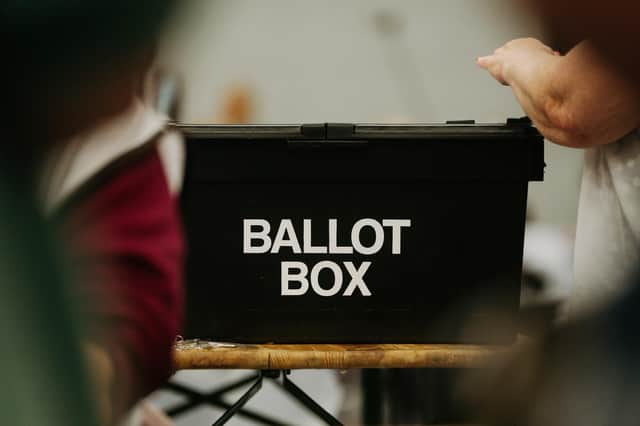

The question of whether all 16 and 17-year-olds throughout the United Kingdom should be granted the right to vote in General Elections, however, has long been discussed but until now has remained unanswered. Last week, Labour announced that from the next General Election, all 16 and 17-year-olds will be able to vote alongside other measures to enhance democracy.
At 16 years old, you can consent to sexual relationships, join the military with parental consent, work and therefore pay tax if you are liable. Should 16 and 17-year-olds not have a say in how their taxes are spent? Is it right that 16 and 17-year-olds can be in their country’s military but not have a say in who runs it? More simply, do young people not have a right to autonomy over their own futures? After all, who gets into office will have profound implications for our education system, youth investment, the price of university fees, action taken on climate change, and more. All of which of course do, or will, disproportionately impact young people. These arguments have long been at the forefront of political discussion and I am glad that Labour have listened and have been convinced.
Beyond the arguments of practicality, there is also a lot to be gained democratically from this decision which is expected to boost political education and engagement. By including young people in our franchise from a young age, we are encouraging habits that they are likely to carry with them throughout life. Furthermore, If young people have no part in the political process, there is little reason for them to proactively research and educate themselves to prepare to participate. Therefore by including 16 and 17-year-olds, we are encouraging political education and engagement and surely that can only be a good thing?
Labour have long said that we will take measures to boost our democracy and uphold the integrity of our elections and this was laid out in our manifesto. The Conservatives have not only ignored these issues for the past 14 years, but have actively made them worse. In failing to strengthen protections against foreign interference in our democracy and actively enforcing inconsistencies in voter ID rules, they made voting confusing and in turn likely put off some of the electorate from engaging with the process entirely. In stark comparison, this Labour government has announced an expansion to forms of voter ID, plans to move towards automatic voter registration and action to protect foreign interference through tighter rules on political donations. Crucially, UK-issued bank cards will be accepted as voter ID, the deadline to apply for a postal vote will be extended and contributions over £500 from unincorporated associations will be checked.
Politics should be accessible for everyone; this not only means making decisions and policies translatable, but also literally means taking any hassle out of getting to the ballot box every 4-5 years and ensuring democracy is fair and works for everyone. I am proud that this Labour Government is acting to make this a reality.