
Sunderland City Council admits it does not have a full list of HMOs across the city
Plans for a major review of houses in multiple occupation (HMOs) on Wearside have been approved after it emerged that council bosses do not have a full list detailing how many there are.
The properties were brought into the spotlight at the most recent meeting of Sunderland City Council on Wednesday following a motion launched by Reform UK.
Councillors were asked to note that HMOs “form an important part of the city’s housing provision, accommodating a range of residents including young people, single adults and those in transitional housing need”.
Yet it also said that “smaller HMOs fall outside of mandatory licensing in many cases” and that “the extent, condition, and management of such properties across Sunderland is not fully evidenced at present”.

It was noted that planning controls related to smaller HMOs “vary across the city” and that The Housing Act 2004 gives local authorities powers to introduce “additional licensing schemes where there is an evidenced need”.
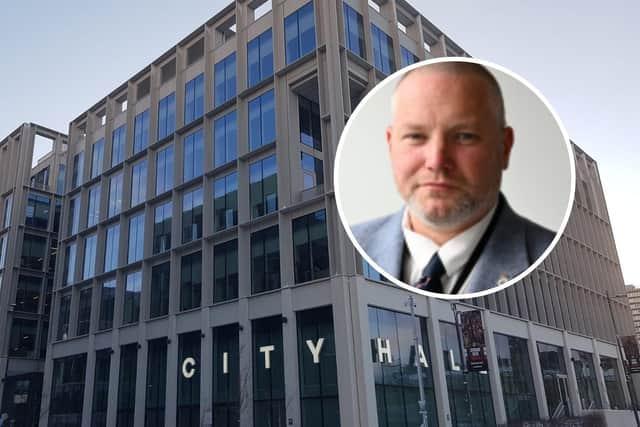
Councillor Paul Donaghy, Reform UK cabinet member for veterans, communities and poverty, launched the motion at City Hall.
Proposals included asking city leaders to “commission a comprehensive review into HMOs” to “establish a clear and evidence-based understanding” of matters including locations and safety standards and to include feedback from residents, tenants and landlords.
Possible next steps include “potential licensing schemes or enhanced enforcement approaches.”

Cllr Donaghy noted the “legitimate and important role” HMOs play in the local housing market and stressed the council was “not trying to stop anybody from being able to get on the housing market or to have somewhere to live”.
“What we must not accept is the growing number of unregistered, unlicensed and unmonitored HMOs operating in the shadows of Sunderland,” he added.
Cllr Donaghy said that HMOs with fewer than five people do not need to be mandatory licensed and that smaller HMOs “too often are the ones responsible for causing problems in our community”.
The cabinet member also said the council does not hold a list of where these HMOs are, which Reform UK was seeking to address.

Cllr Donaghy continued: “Current information has largely come from compliance-led landlords who voluntarily bring this information forward.
“There are far too many falling through the cracks, it’s in these gaps and cracks that the problems are taking root.
“We’ve seen problems linked to exploitation, illegal sub-letting, criminal activity and housing of vulnerable individuals who should not be in these conditions or these standards.
“We have seen neighbourhoods destabilised by properties where nobody knows who is living there, residents feel abandoned and feel that the system does not protect them and that must change.”
Liberal Democrat councillor Steven Donkin also asked the new Reform UK administration to look at Airbnb holiday accommodation, which he said was causing “similar problems” as HMOs including parking impacts.
Reform UK’s Cllr Donaghy, responding, said the council had been made aware of the issue and a “little bit of a loop hole”, adding the HMO motion aimed to “close these loopholes.”
The Reform UK motion was agreed at the meeting.