
Family demand answers from hospital after 'gentle giant' dies following weight-loss surgery

“He told me he was scared and he thought he was dying, but they’d just brush it off”
The devastated family of a 32-year-old man who died after undergoing weight-loss surgery are demanding answers from the hospital which treated him. .
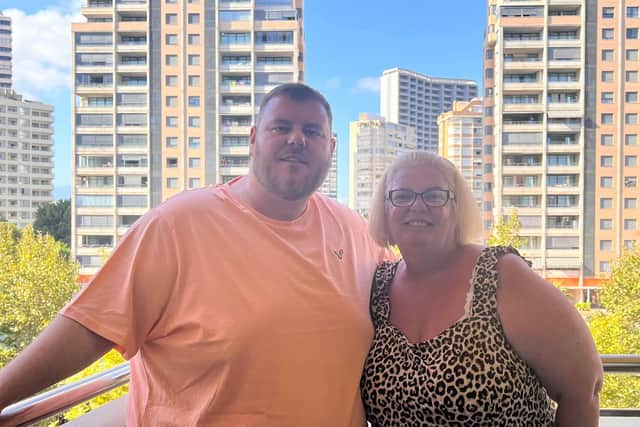

Wayne Clark died a month after bariatric surgery at Sunderland Royal Hospital, following complications which led to him being admitted to its Integrated Critical Care Unit (ICCU).
“Ray of sunshine” Wayne – who was more than 6ft tall and had a BMI of over 60 – took two years to decide to go ahead with the gastric bypass operation. He had hoped the procedure would improve his health, as he had been diagnosed with Type 2 diabetes.
Wayne, from Seaham, told his family he thought there was a small leak very shortly after his surgery took place, on December 3, 2025. But despite several subsequent surgeries, his condition continued to deteriorate.
His family has now submitted a 26-point complaint to Sunderland Royal Hospital, raising concerns around the care Wayne received following his initial bariatric surgery, and demanding answers.

Hi sister Mel Clark said: “The fact Wayne suffered so much is something that I’ll never forget, and we do want accountability for that. He wasn’t taken seriously, he told me he was scared and he thought he was dying, but they’d just brush it off.
“There were times his machines were flashing and we’d get help and they’d tell us everything was normal. My mam would say there was something wrong, she knew her son better than anyone, but they wouldn’t listen.”
South Tyneside and Sunderland NHS Foundation Trust, to which Sunderland Royal Hospital belongs, has sent its condolences to Wayne’s family and confirmed it will “fully support” the inquest into Wayne’s death.
Mel and her partner Stu Healer both work in the care industry and they have hit out at the aftercare Wayne received following his surgery, including “the way he was spoke to by staff”, and “being left on his own for at least half-an-hour in his own faeces”.

Mel said: “While Wayne was in hospital, there were so many really upsetting incidents.”
The family has also criticised the hospital for not alerting them immediately when Wayne was close to death.
They claim the on-call doctor had been summoned during the night, but it was only when Wayne’s family called ICCU at 8am the following morning, as they routinely did, that the nursing team said they should come in urgently.
Mel said: “We were robbed of precious hours with Wayne. They knew during the night he had got so much worse, and when your son or brother is in intensive care, you don’t sleep properly anyway with the trauma and worry – we would’ve been there instantly if we had known anything had changed.”
Responding to the situation, a spokesperson for South Tyneside and Sunderland NHS Foundation Trust, said: "We send our sincere condolences to Mr Clark's family following their loss.
"We have shared an in-depth response with them to help answer the questions they have around his surgery, the complications he suffered and his time in hospital.
"An inquest will now be held into his death and we will support the coroner fully in this process."
Wayne’s case has been taken up on behalf of the family by the law firm Slater and Gordon.
Lawyer Rebecca Hall said: “Wayne hoped this surgery would be life-enhancing and transformative, but the tragedy that ensued has rightly caused his family to ask questions about what went wrong.
“They deserve answers and accountability over what happened to their beloved Wayne, and we will do all we can to ensure they are given that.”
Wayne, who worked as an HGV driver, was a beloved son of Sam and Billy, brother to Mel and uncle to nine-year-old Maggie.
Mel said: “I don’t know how we will get over this as a family. My mam and dad are fading away, and our daughter absolutely adored her uncle Wayne. She is only nine and it has been so hard to explain this to her.”
A stomach leak is listed on the NHS website as one of the potential complications resulting from weight loss surgery.