
Blood shortage 'amber alert' issued as NHS appeals for more donors from Sunderland

Wearsiders are being urged to consider giving blood as the NHS issues an ‘amber alert’ after a cyber attack left supplies running low.
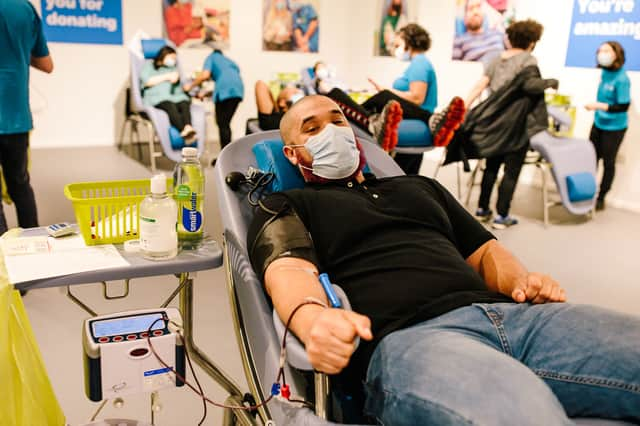

Health leaders say a ‘perfect storm’ of increased demand for O type blood due to a cyber attack impacting on hospitals, combined reduced collections due to high levels of unfilled appointments at donor centres - including in the North East - has caused stocks of blood to drop to unprecedentedly low levels.
NHS Blood and Transplant (NHSBT) has written to hospitals today to issue an ‘Amber Alert’ asking them to restrict the use of O type blood to essential cases and use substitutions where clinically safe to do so. O negative and O positive donors are asked to urgently book and fill appointments at donor centres.
O negative is the type that can be given to anyone – known as the universal blood type. It is used in emergencies or when a patient’s blood type is unknown.
Air ambulances and emergency response vehicles carry O negative supplies.
Just 8% of the population have type O Negative but it makes up for around 16% of hospital orders.
The NHS said hospitals will continue to carry out urgent, emergency or trauma surgery, cancer surgery, transplant surgery and blood transfusions to treat people with long term conditions.
The ongoing cyber incident which has affected London hospitals has impacted O negative stocks.
Since the start of the incident in June, those hospitals have needed an additional 1.7 days of O negative – a 94% increase compared to the same period last year and equating to 170 additional O negative donations every week.
NHS leaders say summer is always a more challenging time for getting people in to donate blood – big public sporting events can see a reduction in people booking in to donate, holidays and travel abroad can also reduce availability, while changeable weather and unexpectedly hot days can see an increase in people unable to give blood due to a lack of hydration or lower iron levels in their blood.
NHSBT runs 235 mobile sessions a week in community venues, which are regularly close to fully booked.
Sessions in the 25 donor centres such as the Newcastle Donor Centre, located in Holland Drive off Barrack Road (NE2 4NQ) have a higher number of appointments available.
The NHS said to supply hospitals with the 1.5 million units of blood they need to treat patients, appointments need to be close to fully booked all year round.
Chief Executive Dr Jo Farrar, said: “We urgently need more O group donors to come forward and help boost stocks to treat patients needing treatment.
“Last month we saw an incredible response from donors who answered our call and filled up our centres, helping us meet the increased demands for blood throughout June. However, seven weeks on, the need for O negative blood in particular remains critical.”
“We’re making an additional 1000 appointments per week available, please take a moment to go online and book. If you can’t find an appointment immediately, please book in for coming days, weeks and months. We will have an ongoing need for donations. Thank you everyone for your support.”
NHSBT’s Chief Medical Officer, Dr Gail Miflin, said: “Three blood donations are needed every minute in hospitals to deal with emergencies, childbirth and routine treatments. Blood only has a shelf life of 35 days so the NHS needs blood all year round.
“There are just under 800,000 regular blood donors, 108,000 of whom are O Negative. Ultimately, we need more people to be regular blood donors and come to one of our 25 donor centres. Women can donate once every four months and men can donate once every three months.”
Professor Sir Stephen Powis, NHS National Medical Director, said: “We’re seeing an increased demand for blood and shortages of stock so it’s important that donors come forward for appointments.”
“With thanks to regular blood donors across the country, hospitals will continue to access stock when necessary and prioritise it for those who need it most.”
“Patients should also continue to come forward for care if they need it – by using 999 in a life-threatening emergency or otherwise using 111 on the NHS App, online or by phone for other health concerns.”
You can register today and book an appointment to donate via the GiveBloodNHS app or at www.blood.co.uk