
University of Sunderland chief Sir David Bell was against Brexit and this is what he thinks 10 years on

Ten years ago today on June 23, 2016, Sunderland was the first city to vote in favour of Brexit
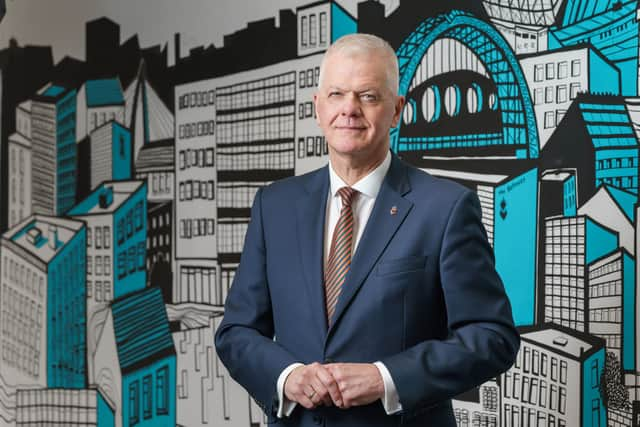
The University of Sunderland’s Vice-chancellor, Sir David Bell, has said despite the university losing around £17m of funding from the European Union, the impacts of Brexit on the city’s university have been “broadly neutral”, although his original stance that the country would be better off within the EU remains.

Ten years ago today on June 23, 2026, the nation voted for Brexit and to officially leave the European Union by a majority of just 4%, with 52% in favour and 48% against.
Sir David was Vice-chancellor at the University of Reading at the time of the referendum.
Reflecting back a decade on, Sir David said: “I made my views clear at the time that overall I was against Brexit and that as a whole we would be better off within the EU. However, I did express at the time there would be some benefits and some negatives.
“I’m also a democrat, and once that decision had been made I was against a second referendum and was of the opinion we needed to respect the vote and make the best of a post-Brexit United Kingdom.”

With foreign EU students travelling to the UK making up a significant proportion of pre-Brexit university populations, as well as paying significantly higher tuition fees, a concern for Sir David and other higher education chiefs was the potential impact of a reduced student intake from overseas.
In the academic year 2016-17, when the UK was still going through the process of leaving the European Union, there were 399 EU students studying at the University of Sunderland, accounting for 38% of all overseas students.
For the current academic year (2025/26) the University of Sunderland welcomed 91 EU students, a drop of 308 (77%) and representing just 3% of overseas student.
However, Sir David said the dramatic decline has been compensated for with an increase in overseas students from further afield, although he did question whether this was part of the thought process at the time.
He said: “I’m not sure it was part of the plan from Government at the time, but one of the outcomes from a reduction in EU students has been an increase in students studying in Sunderland from around the globe.
“Whilst it was a concern at the time, it’s fair to say any financial loss has been compensated for by this wider increase.”
One area which hasn’t been compensated for is the loss of nearly £17m of direct EU funding.
Sir David said: “In the period between 2014 and 2023, when the last of the European funding ran out, the University received approximately £20m. Among other things, this allowed us to create the Hope Street Xchange (£2.3m), and in partnership with regional businesses, run programmes in areas such as sustainable advanced manufacturing (£5.5m) and digital skills (£6.6m), as well as promote internships and enterprise (£4.6m).
“This funding hasn’t really been replaced, as we currently receive a total of £3.1m to run the Sunderland Skills and Inclusion Programme. This is substantially less and this £17m was invested in wider initiatives in partnerships with other organisations, and so it’s the wider city and region which used to feel the real benefit of this money.”
Leaving the EU also meant leaving the European Union’s ERASMUS programme, the EU’s flagship scheme for students, trainees, and staff to study, work, and volunteer abroad.
However, Sir David said by opting into the alternative UK’s Turing international student exchange scheme, more staff and students had benefited from experiencing studying and working abroad, with the shorter placements proving to be “more attractive for Sunderland students”.
When questioned as to whether his original concerns over Brexit had been allayed and whether his stance ten years on has changed, Sir David said: “Whilst my opinion that overall we would have been better to remain in the EU remains, as I said at the time, there has been some benefits as well as some negatives, and the overall affect on the University of Sunderland and higher education has been fairly neutral.”