

Whilst Progress 8 scores remains the Government’s main attainment benchmark on which schools are judged, the Telegraph has produced its own league table factoring a range of additional factors to assess school performance.
Schools across the country have been ranked according to 10 separate criteria, which add up to a maximum score of 40 points. These are designed to highlight a range of key data points, measuring key academic, behavioural and organisational performance.
The key criteria on which the tables have been produced are listed below as well as the scoring weighting afforded to each factor.
English Baccalaureate score (5 points): The proportion of pupils who score a grade 5 or above in the English Baccalaureate GCSE subjects: English, maths, science, a language and either history or geography.
Attainment 8 score (5 points): This measures pupils’ performance in up to eight qualifications, which include English, maths, three English Baccalaureate subjects (sciences, computer science, history, geography and language) and three other approved subjects.
Progress 8 score (5 points): This is the main benchmark on which schools are judged by the Government and uses attainment 8 scores to statistically calculate a positive or negative value based on how much progress pupils have made in their GCSE results compared to students of similarly pre-assessed ability in primary school tests at Key Stage 2.
Disadvantaged pupils score (4 points): This measures the proportion of disadvantaged pupils (by Ofsted’s definition) who achieve a 4 to 9 grade in their GCSE English Baccalaureate subjects.
Comparison with local authority (4 points): Schools which perform substantially above the localised average English Baccalaureate score received a top score of four.
Pupil destinations (5 points): The proportion of pupils who stay in education or employment for at least two terms after their GCSEs. The top 20 per cent of schools for this received the maximum number of points.
Entries options (3 points): GCSE entries were used to assess the variety of GCSEs available to pupils. The top 20 per cent of schools, with the widest offering of subjects, received maximum points.
Oversubscribed schools (3 points): Whether or not your school, as classified by the Department for Education, is oversubscribed.
Class size (3 points): The average number of pupils in a one-teacher class. The top third of schools for smaller classes got the maximum of four points, the worst got just one.
Persistent absence: This scores the proportion of pupils in a school who miss over 10 per cent of their classes. The best schools scored three points, the worst scored one.
The schools were ranked based on the 2023/24 cohort of students and will obviously be subject to change when this year’s (2025) GCSE results are published.
Check out the nine highest scoring schools in Sunderland based on the Telegraph’s league table. The list is for state secondary schools and does not include special schools.
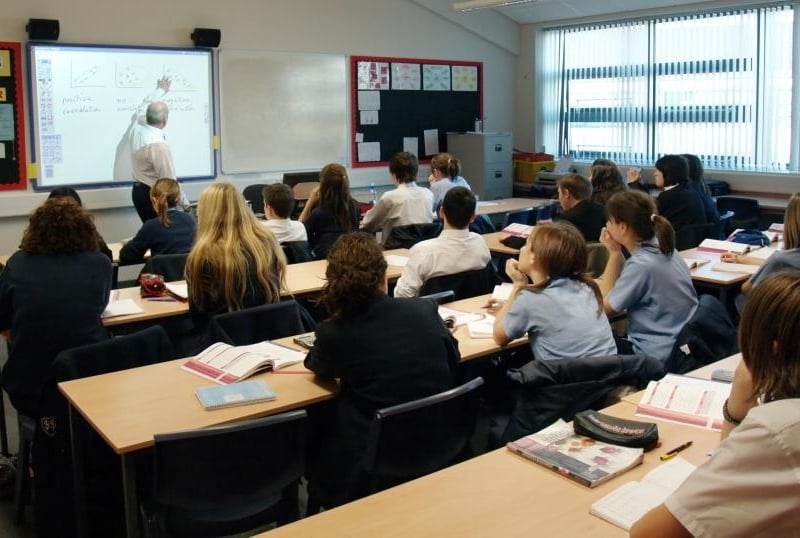
1. School performance
The Telegraph has published its performance league table for the country's secondary schools. Photo: Stock image
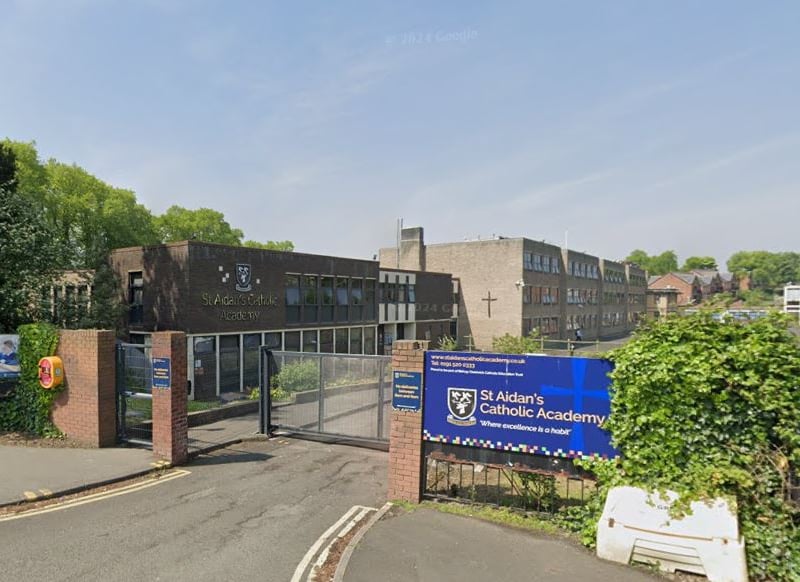
2. St Aidan's Catholic Academy
St Aidan's Catholic Academy was listed number one in the Telegraph's league table with a score of 36/40. The school was given an overall rating of very good. | Google

3. St. Anthony’s Girls Catholic Academy
St. Anthony’s Girls Catholic Academy was listed as joint second and third in the Telegraph's league table with a score of 33/40. The school was given an overall rating of very good. | Katy Wheeler Photo: Katy Wheeler

4. St Robert of Newminster Catholic School and Sixth Form College
St Robert of Newminster Catholic School and Sixth Form was listed as joint second and third in the Telegraph's league table with a score of 33/40. The school was given an overall rating of very good. | Google