
Education secretary promises to bridge the attainment gap so city's kids can fulfil their ambitions

“What we face at the moment is a very stark gap in terms of regional inequality and a big gap in terms of attainment with our young people and that is most pronounced in white working class kids”
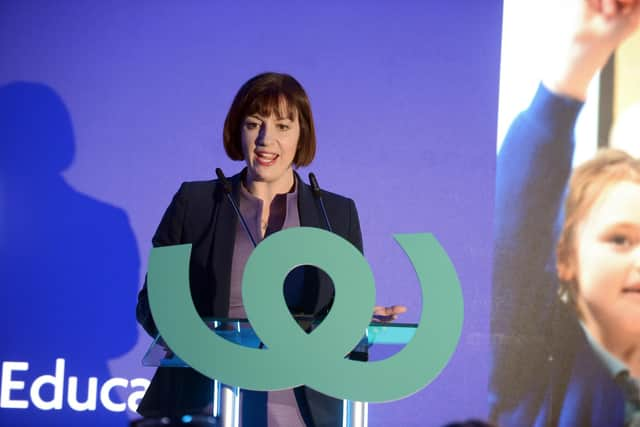
The words of Education Secretary and Sunderland MP Bridget Phillipson when questioned about the attainment gap between secondary school pupils’ GCSE results here in Sunderland when compared to their national counterparts.

The most recently published data for secondary school’s in Sunderland shows a Progress 8 score of -0.31, meaning that on average the city’s teenagers are achieving almost a third of a grade less in their GCSEs compared to students of similar pre-assessed ability across the country.
In the core subjects of English and maths, the most recent data shows 41.6% of pupils attained a grade 5 or above across both subjects compared to the England state funded school average of 45.9% .
When it comes to school suspensions, the majority of the city’s secondary schools have a significantly higher rate than the national average of 11.31 suspensions per 100 pupils across the academic year.
Addressing the disparity and how it can be tackled, Ms Phillipson said: “It’s about every child achieving their potential and in order to do that we do have to recognise the challenges we see around some of the long standing regional inequalities, including here in Sunderland - something which I feel hasn’t been confronted for a very long time.
“Our school’s white paper, which will published this autumn, is going to address inequalities in education such as here in Sunderland.
“At the heart of that paper is that every child should achieve wherever they are from in the country and whatever their circumstances.
“This is a really complex area, but at the crux is tackling child poverty and driving up teaching quality in our schools.”
Ms Phillipson feels there needs to be a particular focus in investing in Early Years education (up to five).
She said: “I have such a priority on the Early Years as we know that by the age of five that attainment gap has already opened up and it doesn’t recover.
“It’s why I feel it’s important, in terms of giving children the best life chances, to really focus on Early Years development.
“It’s too late if you wait until children are 16 to deliver the change that’s needed.
“Eradicating child poverty is the main aim of this Government and that is no more apparent anywhere than here in the North East. Enabling children to fulfil their ambitions is my promise.”