

And organisers of the workshops in Horden, who have been assessing the results over the summer, hope some of the youthful ideas are picked up and taken on board by developers preparing their housing plans for the village.
Gerry Ruffles, of MOBIE North - a project set up by Washington-born TV architect George Clarke - led the design challenges with a small team spending the day at each school and said he was amazed by the children’s enthusiasm and clear-eyed approach.
“It’s surprising just how much passion, how much creativity there is among these young kids,” he said.
“They see things very clearly in terms of what it is they want, and things like the environment and sustainability are things they’re interested in.
“It’s incredibly rewarding working with them because not only do they come up with good ideas of what makes a successful community and how to create the right environment for it.”
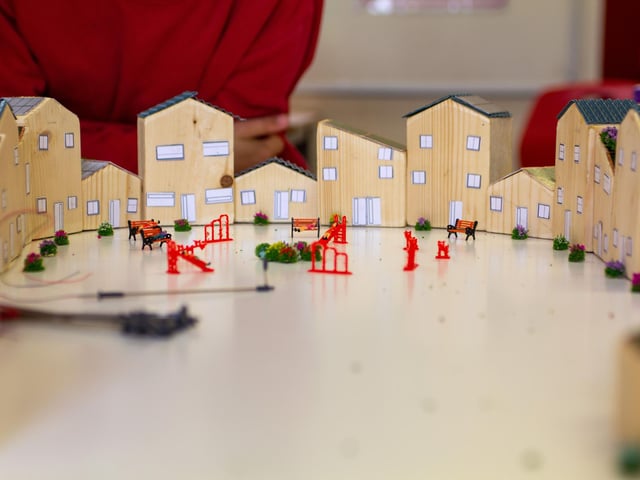
The design challenge the children were set was to create a Master Plan that showed their vision for Horden by designing a sustainable housing scheme for 100 homes with houses for all ages designed around pedestrianised, community living.
The plans included ideas for new homes, community spaces and environmentally friendly solutions.
MOBIE’ North’s Wayne Kennedy, who worked alongside Gerry, said: “It was interesting to see the classes working together as teams to come up with ideas and solutions.
“The first thing they all wanted to do was to create a place where everyone could play, and they built from there.
“We also learned that the planet and the environment are really important to them.
“They’ve got this underlying need for sustainable futures and green spaces, fresh air, exercise.
All the things we bang on about as adults and parents come quite naturally to a child’s way of thinking, especially in the classroom,
“They were really interested in finding out about solar, wind, geothermal heating from the minewater below them, using recycled materials, green roof systems, harvesting rainwater and flood prevention.
“What struck me was how well the children designed their green energy, and green transport solutions - they were really interested in providing green spaces, parks, cycle paths, ponds.
"They know a lot more about sustainability than we probably give them credit for.”
Horden is frequently highlighted in national reports as one of the most deprived areas in the country, with much of that attention focusing on the ‘numbered streets’ - once at the heart of the community but now almost all boarded up and scheduled for demolition.
The village went into steep decline following the closure of its pit in 1987, which once employed more than 4,700 people.
Now, however, concerted efforts are being made to revive Horden with a train line restored to the village and more than £10m set to be invested in removing exhausted housing stock and replacing it.
Gerry said: “It’s great that money is going to be invested and new life breathed into the community.
“The schools we visited are in this part of Horden, so the pupils have genuine lived experience of the areas primed for redevelopment, and so should hopefully benefit from the new and proposed regeneration.”
MOBIE North plans to conduct a series of school visits across East Durham to showcase the best ideas later in the year.
The visits have been sponsored by the North East Combined Authority and the Mayor, Kim McGuinness. The MOBIE North team hopes that the planners and developers will consider the pupils’ reports, video, and feedback when planning further regeneration for the village where the youngsters live.
1. Contributed
Cotsford Primary School in Horden create their own sustainable communities. Photo: Submitted
3. Contributed
Cotsford Primary School children came up with their ideas of how best to redesign Horden when planned regeneration happens. Photo: Submitted
4. Contributed
Cotsford Primary School came up with ideas for renewable energy, parks and playgrounds for Horden. Photo: Submitted