
Port of Sunderland's 100,000 tonnes in first year of rail route
The Port of Sunderland has already taken 20,000 tonnes
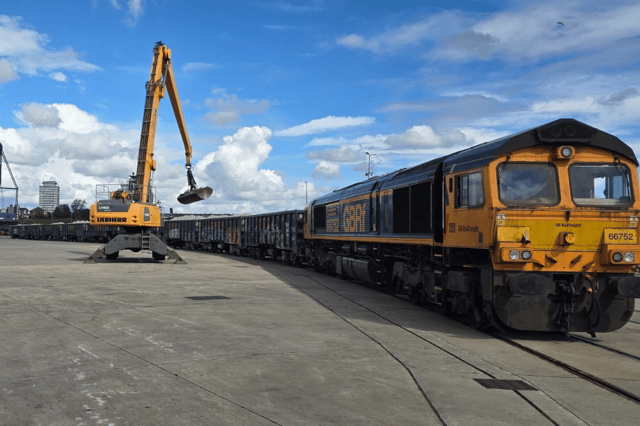
Sunderland’s new rail freight route into the city’s port is expected to move around 100,000 tonnes of aggregate in its first year.
The route opened on June 9 and averages one train per week into Sunderland. Each service carries 19 wagons and around 1,425 tonnes of material. Fourteen services have delivered nearly 20,000 tonnes so far.
Building materials firm Holcim UK has taken the opportunity opportunity to use Sunderland’s existing rail route as a route into the region. The aggregate will be used in asphalt production across the North East.
Changing supply arrangements at the Port of Tyne is putting pressure on established logistics routes, so Sunderland has offered a way to keep material moving, reduce road haulage costs and make more use of existing infrastructure.
It is good news for the Port of Sunderland, which has been looking to increase freight and make greater use of its rail capability.
The government has set a target of at least 75% growth in rail freight by 2050 and Holcim UK says “road haulage was not commercially realistic for the volume required”.
Delivery of the route has seen Port of Sunderland, Holcim and GB Railfreight working closely together.
Mustapha Nyass, regional operations manager at Holcim UK, said: “Reliable asphalt supply is critical to keeping North East construction and infrastructure projects moving, from road maintenance to wider regional development.

“We faced a real supply challenge, but the answer was not simply to absorb higher costs or accept less flexibility.
“By using Sunderland’s railhead, storage space and port capability, we have created a practical new route that supports local construction, strengthens our asphalt operations and gives us room to grow when demand increases.”
There is storage capacity of up to 6,000 tonnes at the Port of Sunderland, offering Holcim rail volume without paying for new infrastructure.
Damien Preece, rail general manager at Holcim UK, added: “Rail only works when the operational detail works. You need the material, the wagons, the paths, the route knowledge and a receiving site that can handle the flow safely.
“Sunderland lined up on all those points, which is why the project moved from an idea to a weekly freight movement so quickly.”