
How Sunderland's new Keel Crossing got its name

It’s the city’s newest landmark and has been the talk of Sunderland since it started to make its way across the Wear, but how did Keel Crossing get its name?
Open for one day on August 22 to allow rugby fans to more easily get from the city centre to the stadium for the Rugby World Cup, it’s then closed for the final cosmetic works before an official opening date is announced, after which it will be open for day to day use.
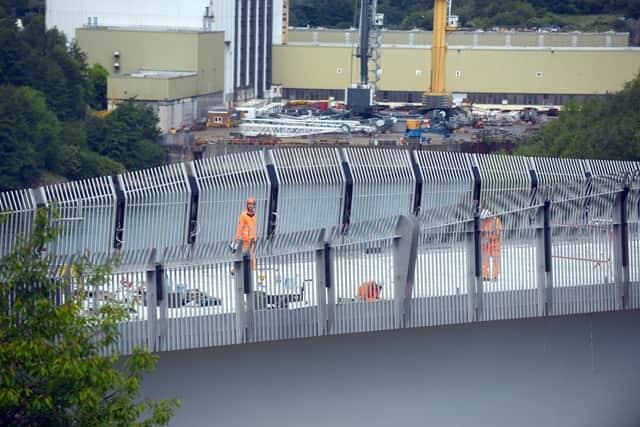

Here’s a reminder of how the name came about:
After a shortlist was created by community groups following hundreds of public suggestions, three final names of Keel Crossing, Wear Crossing and Beacon Bridge were put to the public vote, with Keel Crossing taking the most votes.
The name is a tribute to Sunderland’s proud shipbuilding heritage.
Chosen by more than 55% of residents, the name honours the keel, the backbone of a ship, and reflects the city’s rich maritime past along the River Wear – once one of the world’s most productive shipbuilding hubs.
Spanning 260m and standing 30m above the river, Keel Crossing will:
*Extend the iconic Keel Line
*Improve access to the Stadium of Light and Riverside Sunderland
*Support the connection of one of the UK’s most ambitious regeneration projects.
A spokesman from Sunderland City Council said: “We can’t wait to see Keel Crossing come alive on matchdays – a sea of red and white crossing the Wear!”
The Keel Crossing has been built by VolkerStevin on behalf of Sunderland City Council and is a central pillar in the development of Riverside Sunderland, one of the UK’s most ambitious urban regeneration projects.
The footbridge is one of several high-profile developments currently under construction at Riverside Sunderland, alongside the Housing Innovation and Construction Skills Academy (HICSA), Maker & Faber, Culture House, the new Eye Hospital and Vaux Housing.