
New book aims to shed more light on the controversial Lord Londonderry
A new biography of one of the region's most controversial historical figures is out now.
The book, The Marquess of Londonderry, is about the 7th person to hold the title.
Charles Londonderry was from a family which tends not to be too fondly remembered.
The 7th marquess, Charles Stewart Henry Vane-Tempest-Stewart, was an MP who held a string of ministerial positions. But he is perhaps best known for his efforts to appease Hitler, his antisemitism and intense dislike of the miners.
However, the author of the book, Neil Fleming, professor of Modern History at the University of Worcester, says Londonderry was more complex than that.
Professor Fleming has updated the original 2005 edition to include much more about the North East.


The author said: "The original book I published was smaller. The difference is with this one is that I've included more about the North East. That was not as developed in the original edition.
It's mainly about his role in the coal industry and his rather faltering, not always successful attempts to try to be a more moderate owner in an industry in decline.
"He struggled because he was viscerally hostile to the Miners' Federation of Great Britain, led by Arthur Cook. He just despised them.
"He often talked about the need for moderation and cooperation, in the same breath he would be deeply hostile towards the union."
History even even less kind when it comes to Londonderry's views on Nazi Germany.
He was the inspiration for the naïve appeaser Lord Darlington in the 1989 novel Remains of the Day, later made into a film.
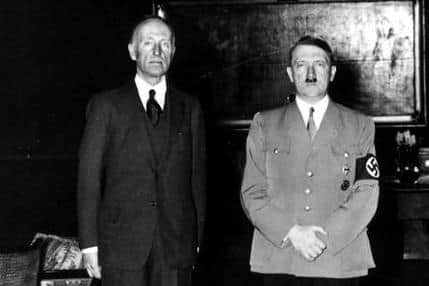
But Professor Fleming added: "I would challenge that, insofar as nobody had studied his papers for years.
People like Lloyd George and (Labour leader) George Lansbury were in favour of appeasement too. That's not to say they liked Nazism, but what they were against was war.
"(Londonderry) put his head above the parapet and went further in ways he would regret.
"He wasn't far right. He was a minister in the National Government in the early 1930s, which was a very centrist administration. He really got attacked from the right, mainly for wanting to give India greater independence.
"He defended votes for women and supported talks with the TUC, although he didn't like the miners.
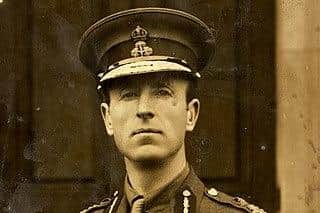
"In Northern Ireland he created non-sectarian education. That was torn to pieces by reactionary figures.
“He's not the caricature he's depicted as. He a more complicated figure, but he was prejudiced and advanced slurs about the Jewish people having disproportionate influence in sections of the economy.
"He used those arguments to excuse what was happening in Germany. He excused it and tried to convince people in Britain that Germany was different, therefore they shouldn't tut-tut.
"He was antisemitic, but his son-in-law was Jewish. The antisemitism he articulated was very widespread in British society. What was not the done thing was to say it so publicly."
The Marquess of Londonderry is available from publishers Bloomsbury.